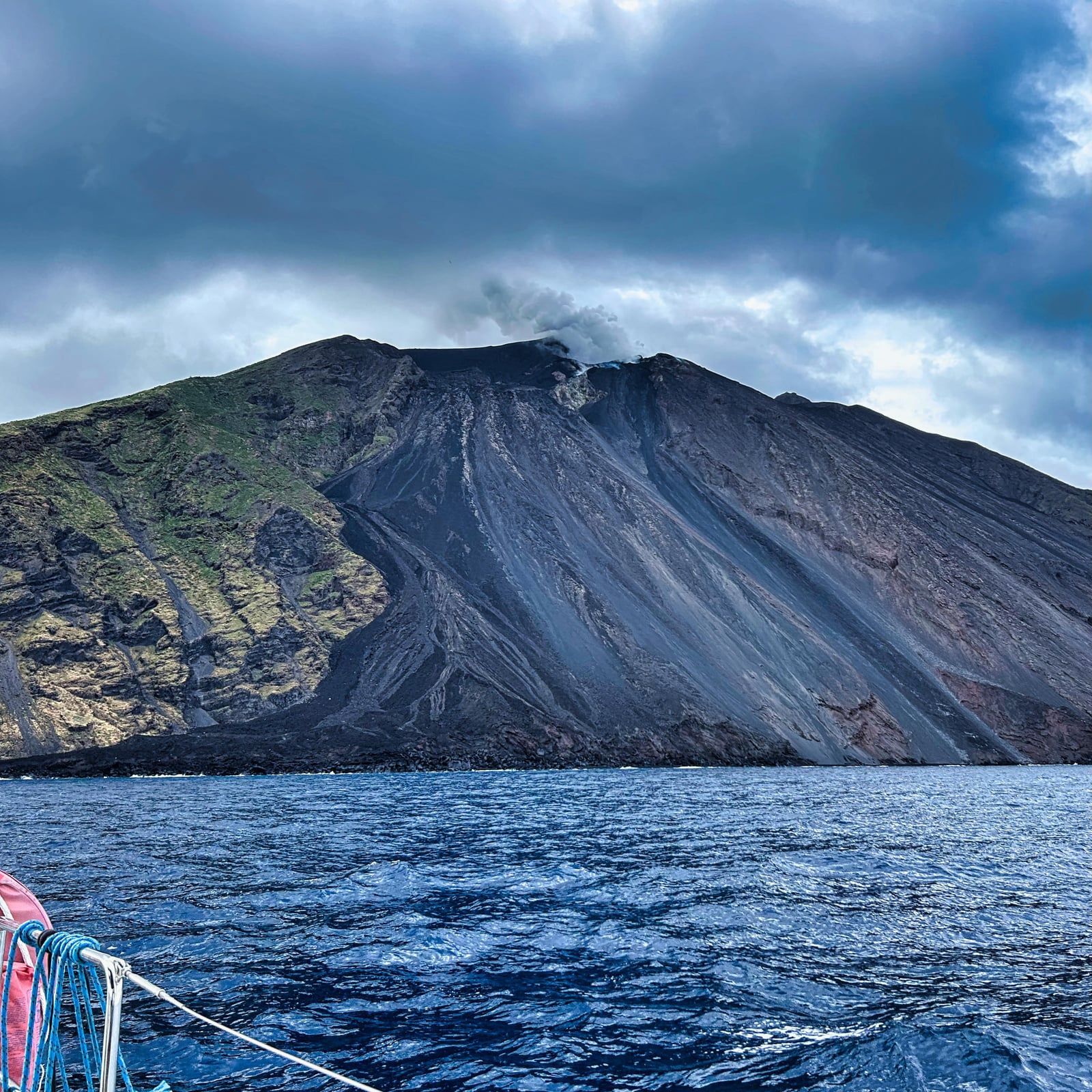
Stromboli is an active stratovolcano rising 924 meters above the Tyrrhenian Sea off the north coast of Sicily. It erupts every 10 to 20 minutes, projecting glowing lava and ash into the sky.
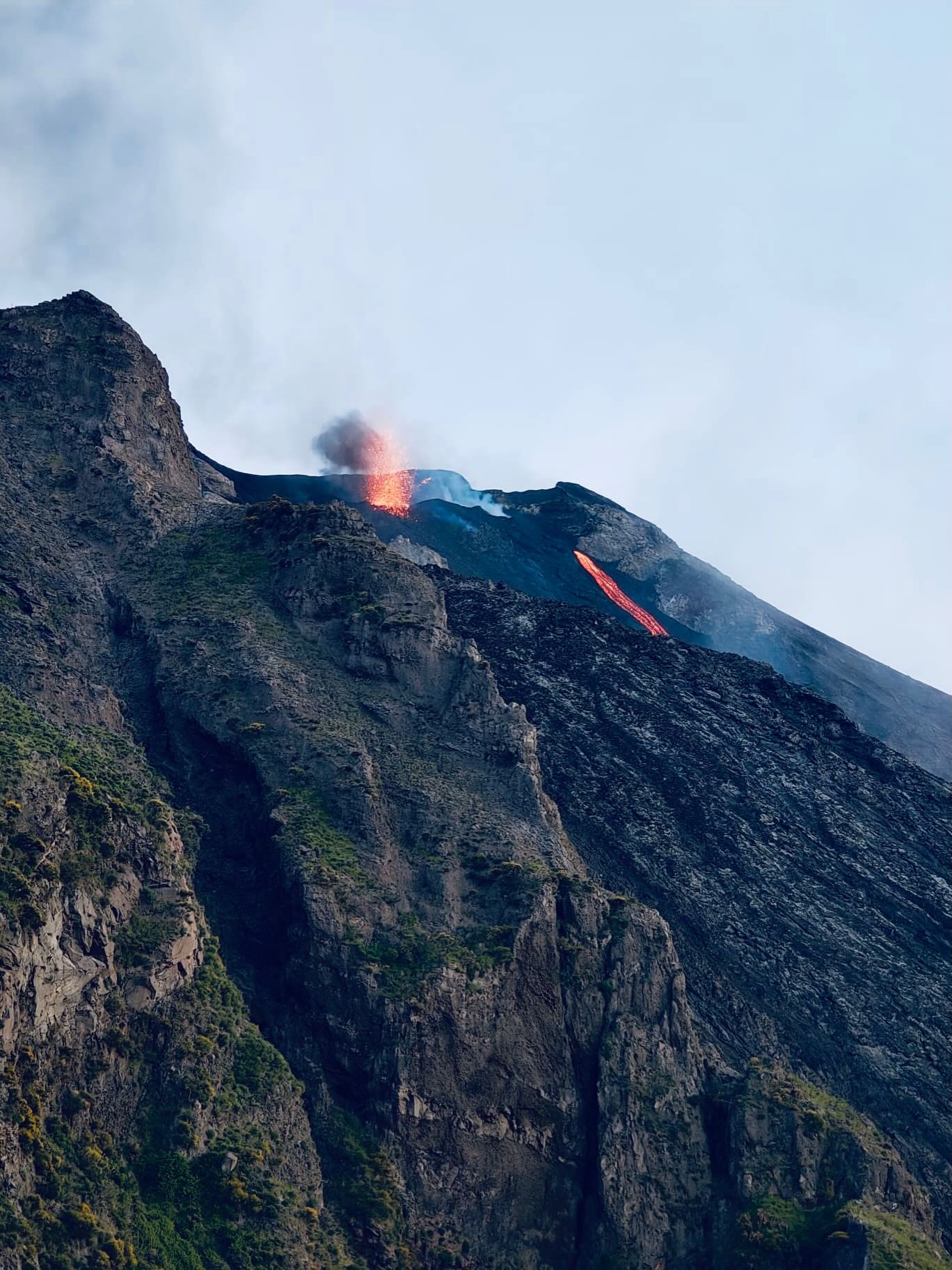
Stromboli erupts 72 to 144 times a day. Glowing lava fountains and ash bursts shoot into the sky from craters located 700 meters above the Tyrrhenian Sea. This continuous activity earned the island its nickname, the Lighthouse of the Mediterranean. It forms part of the Aeolian Islands archipelago off the north coast of Sicily. The visible landmass covers 12.6 square kilometers, representing only the upper third of a massive stratovolcano. The entire geological structure extends more than 2,000 meters down to the sea floor.
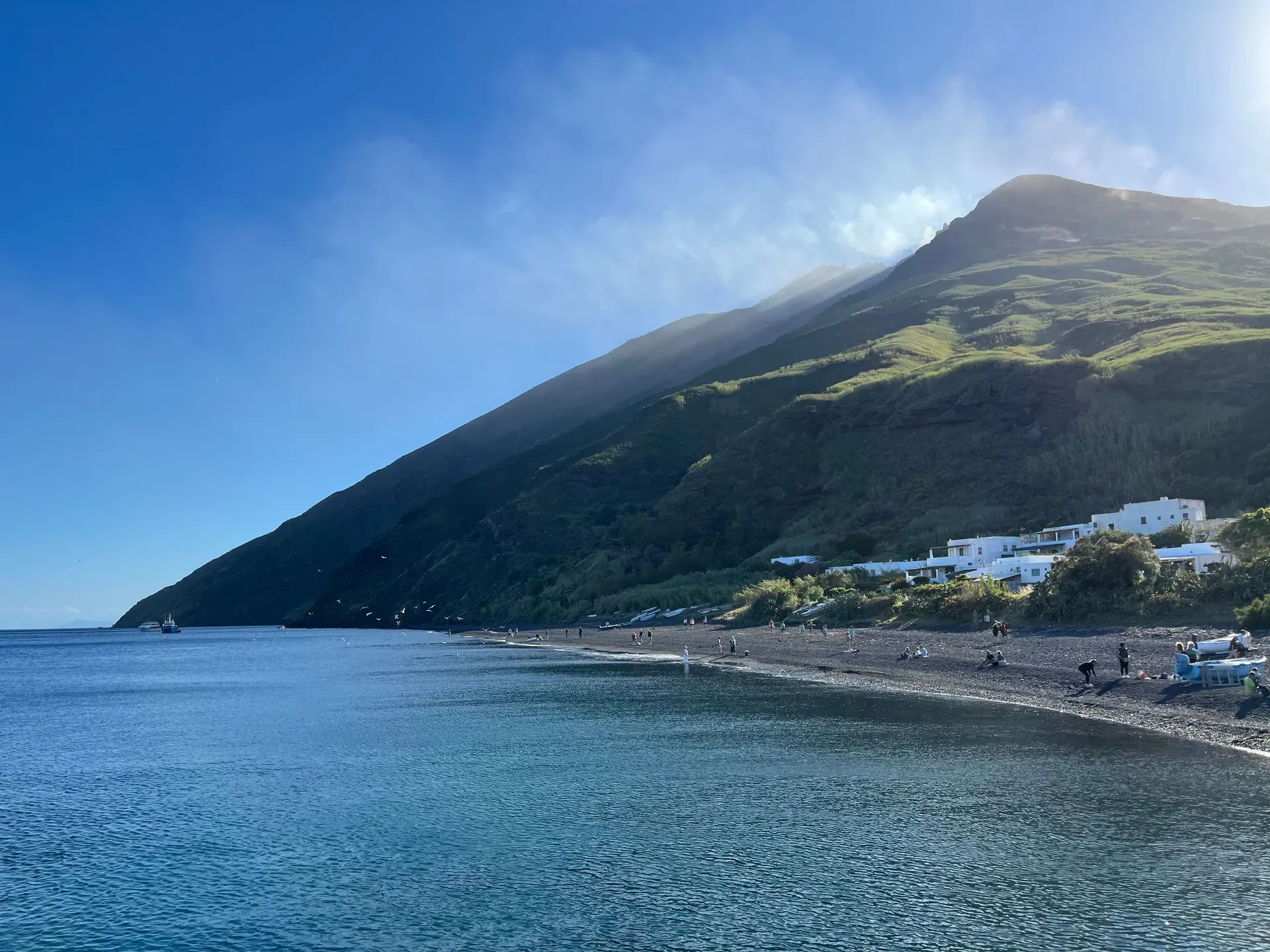
Visitors arrive by hydrofoil from Milazzo, Naples, or neighboring Salina. The Liberty Lines ferry from Milazzo takes 90 minutes and costs roughly €25. Stepping off at the Scari pier, you immediately smell sulfur in the air and feel the coarse black volcanic sand underfoot. Ape Car porters wait at the dock to transport luggage up steep, narrow streets for €10 to €15. No tourist cars operate here. You walk everywhere. The main village features stark whitewashed houses that contrast sharply with the dark, jagged terrain.
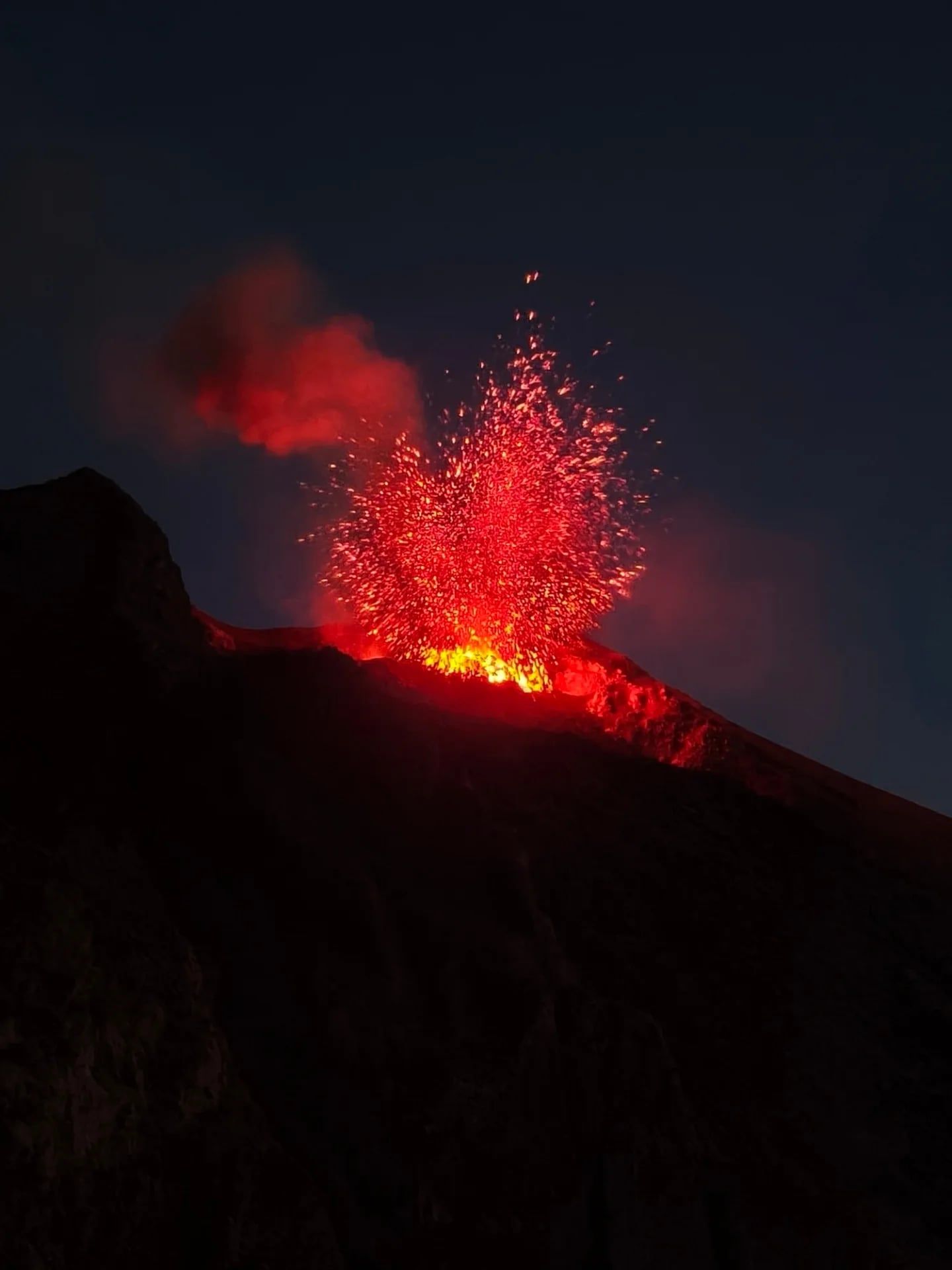
Hiking the volcano requires physical preparation and strict timing. Guided summit treks cost €30 and depart between 15:00 and 17:30, timing the three-hour ascent to reach the upper viewing platforms just as the sun sets. The ground physically shakes before each explosion. Red magma jets against the dark night sky, while toxic gases like sulfur dioxide drift from the active vents. Guides enforce rigid safety rules, requiring helmets, respirators, and heavy-duty boots. Without a certified volcanological guide from companies like Magmatrek, you cannot legally climb above 290 meters. Violators face fines exceeding €500. Check the official maritime schedules and Civil Protection bulletins at the pier before planning any ascent, as strong southeast Scirocco winds frequently cancel ferry services.
Magma began building this volcanic island approximately 200,000 years ago. The earliest eruptions formed Strombolicchio, a jagged rock tower sitting a 15-minute boat ride from the current island. This residual neck is all that remains of the original active vent. Over millennia, the eruptive center shifted southwest. Successive lava flows and pyroclastic deposits built the modern stratovolcano layer by layer. Around 5,000 years ago, a massive flank collapse on the northwestern side tore away a huge section of the mountain. This catastrophic geological event created the Sciara del Fuoco, a steep, barren depression that now funnels debris directly into the sea.
Historians have documented Stromboli's continuous eruptions for 2,400 years. Carbon dating confirms near-constant activity for at least the last 1,400 years. The current eruptive phase started in 1932 and has not stopped. The volcano defines the scientific category for "Strombolian" eruptions—characterized by regular, mild explosive bursts of expanding gas that eject incandescent cinders. While usually moderate, the volcano occasionally produces violent paroxysms. A powerful explosion in 1907 shattered windows across the island's villages and rained heavy ash on the settlements. In 1930, a massive eruption triggered a localized earthquake and a small tsunami, permanently altering sections of the coastline.
The continuous activity drew intense scientific attention throughout the 20th century. Researchers established advanced monitoring stations across the slopes to track seismic tremors, ground deformation, and gas emissions. In 2000, UNESCO designated Stromboli and the neighboring Aeolian Islands a World Heritage site for their outstanding record of volcanic phenomena. Today, the Civil Protection Department regulates all access to the mountain. They adjust the alert levels daily based on real-time seismic data. The current alert level sits at Yellow, with aviation alerts at Orange due to airborne ash plumes. During periods of heightened activity, authorities close the upper trails entirely. Large landslides along the Sciara del Fuoco can still trigger sudden tsunamis. Warning sirens sit positioned along the coast. If you hear the sirens or notice the sea withdrawing, you must immediately move to designated high-ground waiting areas.
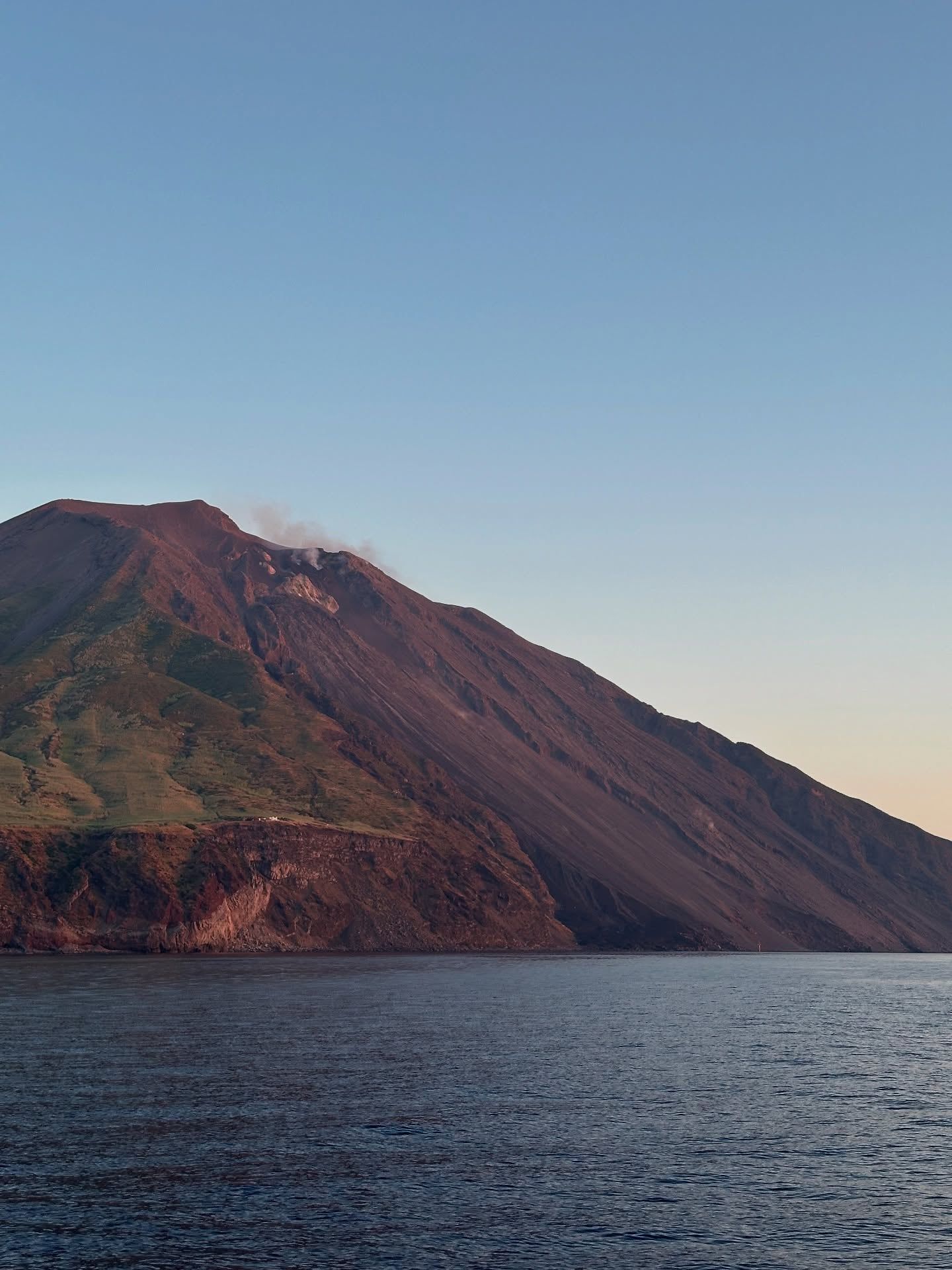
Stromboli rises 924 meters above sea level, constructed entirely of hardened lava, compacted ash, and igneous rock. The active crater terrace sits slightly below the summit at an elevation of 700 meters. This terrace contains multiple vents that continuously release gas and erupt magma. The surrounding high-altitude terrain consists of loose, black volcanic sand and jagged basalt formations. Vegetation is sparse above 400 meters, replaced entirely by barren, heat-scorched rock that radiates intense temperatures during the summer months. The extreme heat from active lava flows can melt camera tripods and the rubber soles of hiking boots.
The Sciara del Fuoco dominates the northwestern flank. This "Stream of Fire" is a steep, barren chute dropping at a 50-degree angle directly from the craters into the Tyrrhenian Sea. When the volcano erupts, glowing rocks and ash tumble down this slope. At night, the sliding debris creates a glowing red trail visible from passing boats. The constant dumping of hot material prevents any vegetation from taking root on this side of the island. Boat tours depart at sunset specifically to view this slope from the water, keeping a safe distance from the falling rocks.
Below the 400-meter mark, the landscape changes completely. Dense Mediterranean scrub, including broom and caper bushes, covers the lower slopes. Whitewashed houses cluster in two main settlements: Stromboli village in the northeast and Ginostra in the southwest. Ginostra remains completely isolated, accessible only by a 10-minute ferry ride from the main port. It houses only a few dozen residents and features no paved roads.
The beaches surrounding the island consist of fine, pitch-black sand that absorbs the summer heat. Walking barefoot on these beaches in July will burn your feet. The dark sand contrasts heavily with the clear blue waters of the Tyrrhenian Sea. The coastal trail leading to the 290-meter Punta Labronzo viewpoint winds through these lower elevations. This two-hour round-trip path offers a safe, self-guided option for families and photographers who cannot tackle the steep summit switchbacks. Drone photography remains heavily restricted across all these areas due to aviation safety regulations and unpredictable ash plumes.
The volcano dictates the rhythm of daily life for the island's 500 permanent residents. Locals call the mountain "Iddu," a Sicilian dialect word meaning "Him." This personification reflects a deep respect for the unpredictable geological force towering over their homes. They do not view the volcano as a threat, but as a restless, living neighbor. The constant low rumble of explosions provides a background soundtrack to village life, vibrating through the floorboards of the whitewashed houses.
Stromboli has no natural source of fresh water. Tanker ships arrive from the Italian mainland once a week in winter and three times a week in summer to fill the municipal reservoirs. Residents must manage their water usage carefully. The lack of public street lighting is an intentional community choice. It preserves the visibility of the glowing eruptions and the night sky. Walking between houses after dinner requires carrying a torch to navigate the uneven, unpaved paths safely.
The island gained international attention in 1950 with the release of Roberto Rossellini's film "Stromboli," starring Ingrid Bergman. The production brought electricity and early infrastructure to the isolated fishing community. Today, the local economy relies heavily on the tourism generated by the volcano's fame. Restaurants like the Osservatorio serve traditional Aeolian cuisine, utilizing local capers, olives, and fresh seafood. Diners eat spaghetti alla Stromboliana on open terraces, watching red magma light up the dark sky just a few kilometers away.
Despite the influx of summer tourists, the island maintains strict local laws to preserve its character. Motorized vehicles are banned for non-residents. Beachwear is strictly prohibited on the hiking trails. The community prioritizes safety and environmental preservation over mass tourism convenience. The €5.00 landing fee collected from ferry tickets funds the maintenance of the trails and the removal of waste. Living on Stromboli requires accepting isolation, relying on imported resources, and respecting the strict boundaries set by the Civil Protection Department. The residents adapt to the mountain, not the other way around.
Stromboli relies entirely on tanker ships from the mainland to deliver drinking water to its 500 residents.
The villages lack public lighting to ensure the glowing lava and starry night sky remain clearly visible.
The 1950 film 'Stromboli' starring Ingrid Bergman introduced the isolated island to international tourism.
Locals refer to the active volcano simply as 'Iddu' (Sicilian for 'Him'), treating it as a living neighbor.
Motorized vehicles are banned for tourists, leaving Ape Car porters and electric taxis as the only transport.
The 924-meter peak represents only the top third of a structure extending over 2,000 meters to the sea floor.
The volcano ejects glowing lava and ash every 10 to 20 minutes, a cycle that has continued since 1932.
Stromboli erupts roughly every 10 to 20 minutes. These moderate explosions eject glowing lava, lapilli, and ash up to a few hundred meters into the air. The continuous activity creates a bright natural light show at night.
The current continuous eruptive phase began in 1932 and has remained uninterrupted. This persistent activity earned the volcano its famous nickname, the Lighthouse of the Mediterranean.
No, hiking above 290 meters without a certified volcanological guide is strictly prohibited. Violating these safety regulations results in heavy fines exceeding €500. The summit itself is currently restricted due to high volcanic activity.
The current alert level is set at Yellow, which is the second lowest level on Italy's four-level scale. The aviation alert level is maintained at Orange, reflecting ongoing explosive activity and airborne ash.
There are no cars or public transport systems on Stromboli, and only residents are permitted to drive motorized vehicles. Visitors must explore the island on foot or hire electric taxis to get around.
The guided trek to the 924-meter summit takes approximately 3 to 4 hours to ascend. The entire round-trip excursion, including viewing time at the top, takes about 5 to 6 hours and covers steep switchbacks.
The Sciara del Fuoco, or Stream of Fire, is a steep depression on the northwestern flank of the volcano. It acts as a natural chute, funneling lava flows and pyroclastic ejecta directly into the sea.
Stromboli has no natural source of drinking water. Tanker ships import water to the island once a week during the winter and three times a week during the busy summer season.
Visitors must pay a small Aeolian Islands landing fee of approximately €5.00, which is typically included in the ferry ticket price. An additional trekking tax applies if you plan to hike the volcano.
You can hire local Ape Car porters at the Scari pier to transport your bags. This service costs between €10 and €15 depending on the distance, saving you from carrying heavy bags up steep streets.
Browse verified tours with free cancellation and instant confirmation.
Find Tours