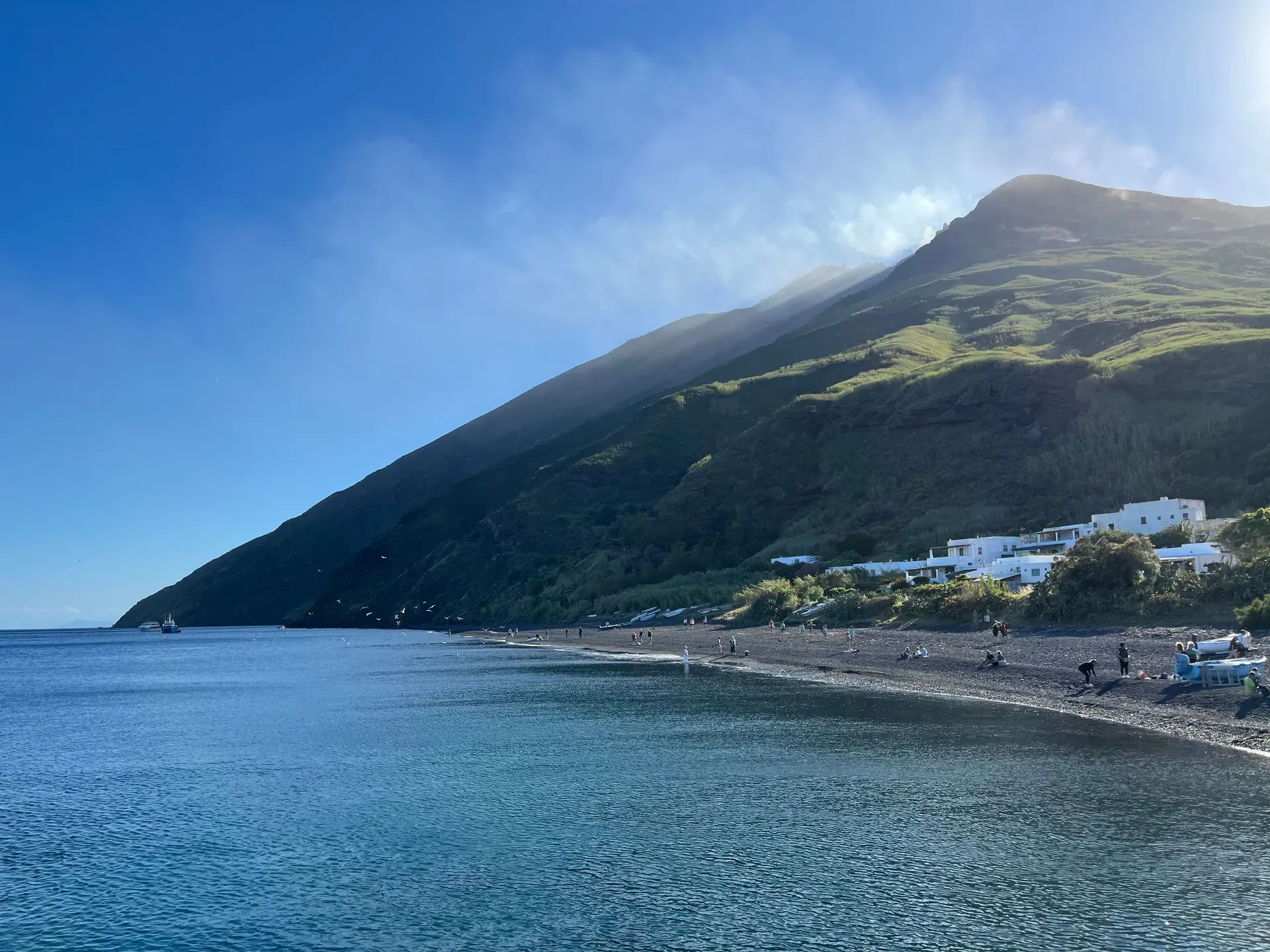
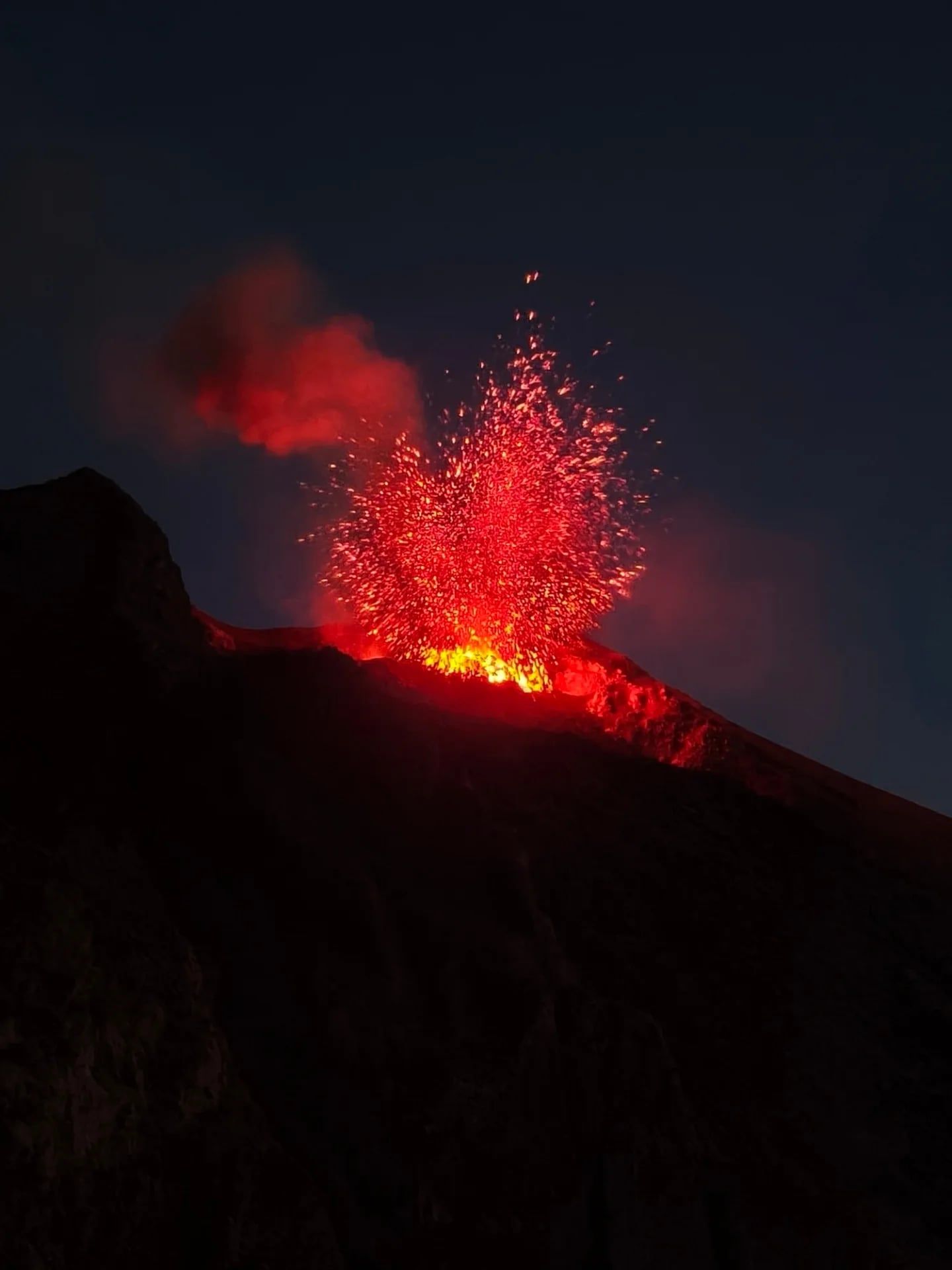
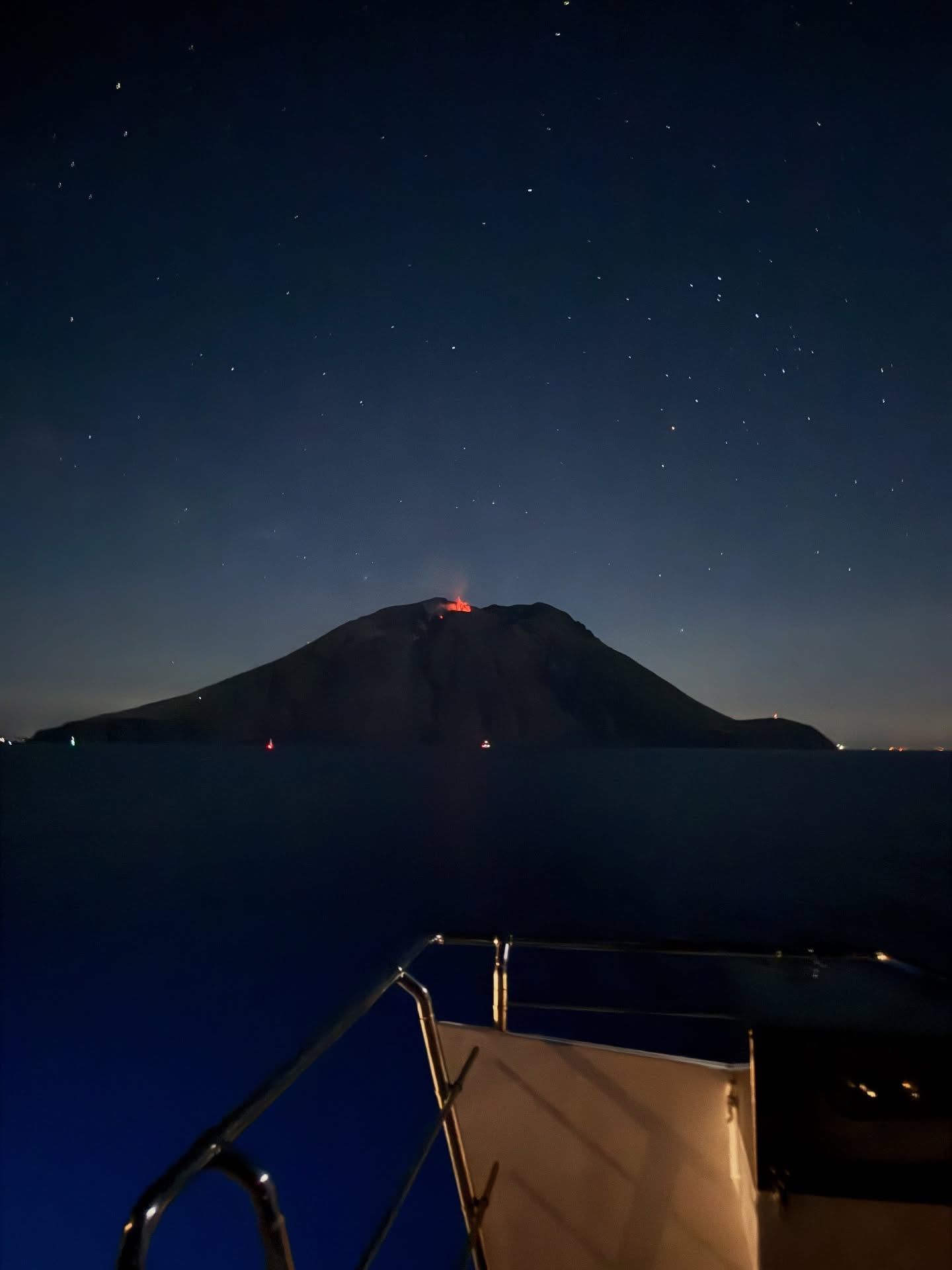
Rising 924 meters above the Tyrrhenian Sea, this active stratovolcano has been erupting continuously since 1932. Visitors can hike to the 290-meter viewpoint or join a guided summit trek to watch glowing lava fountains launch into the dark night sky.
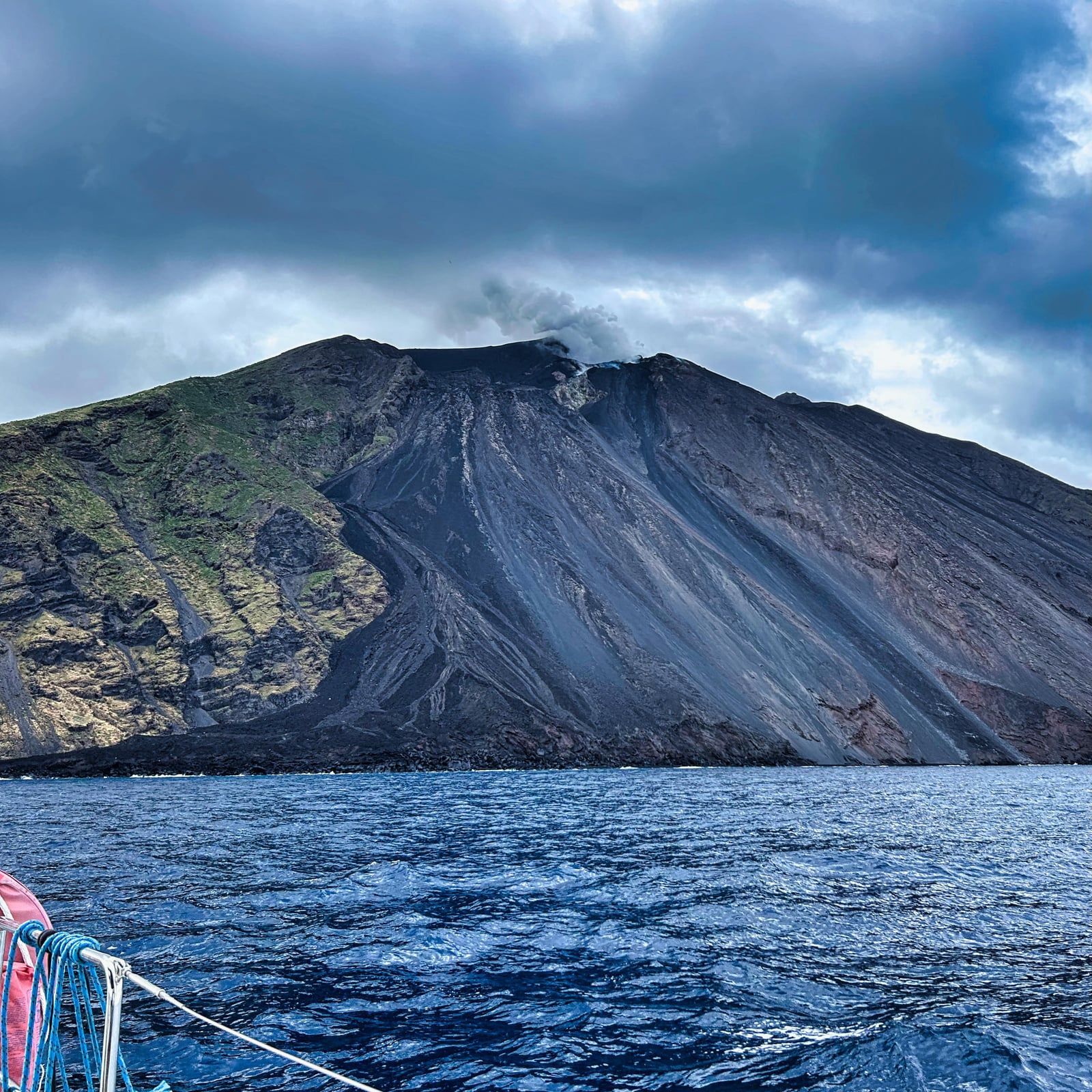
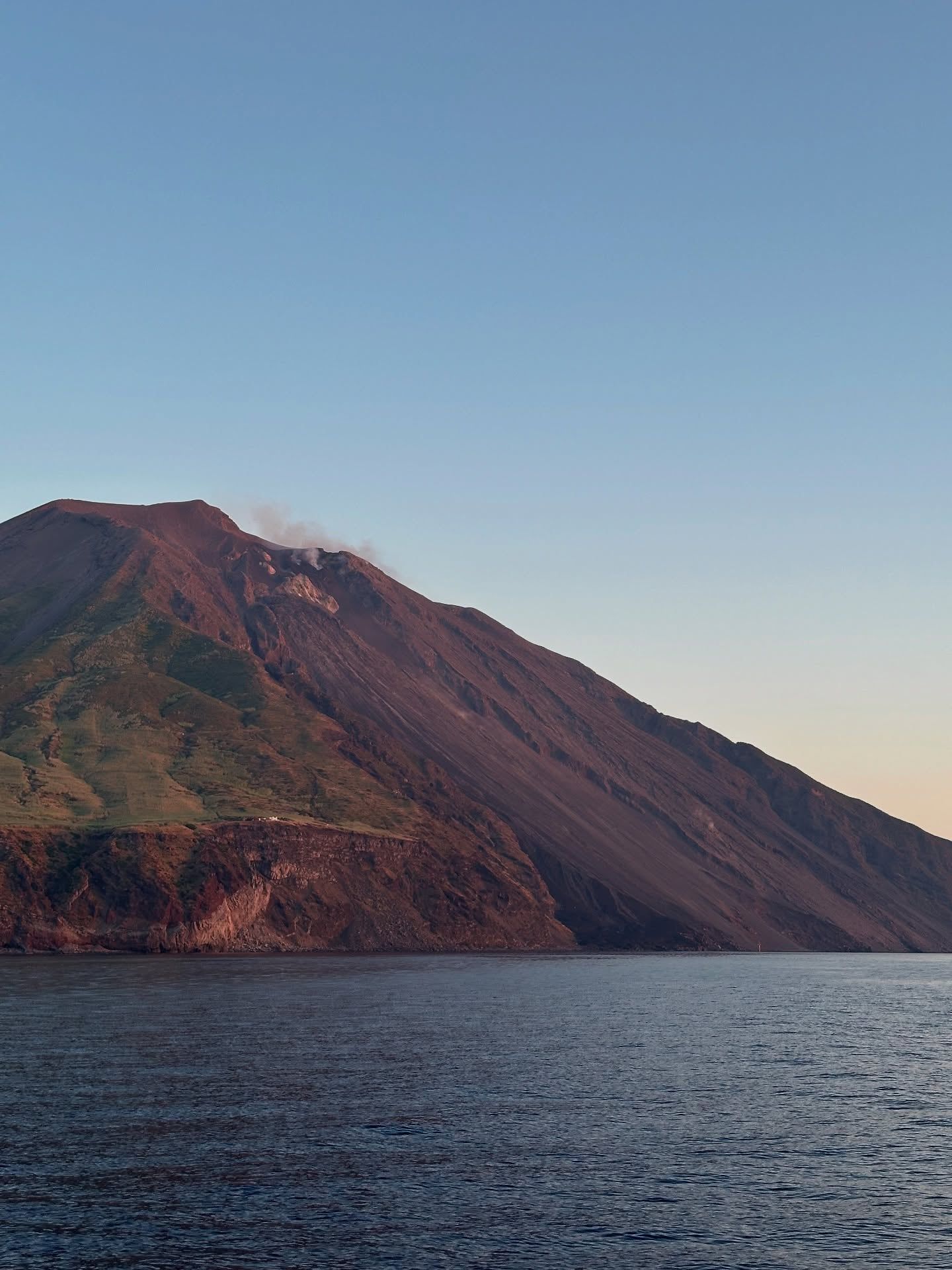
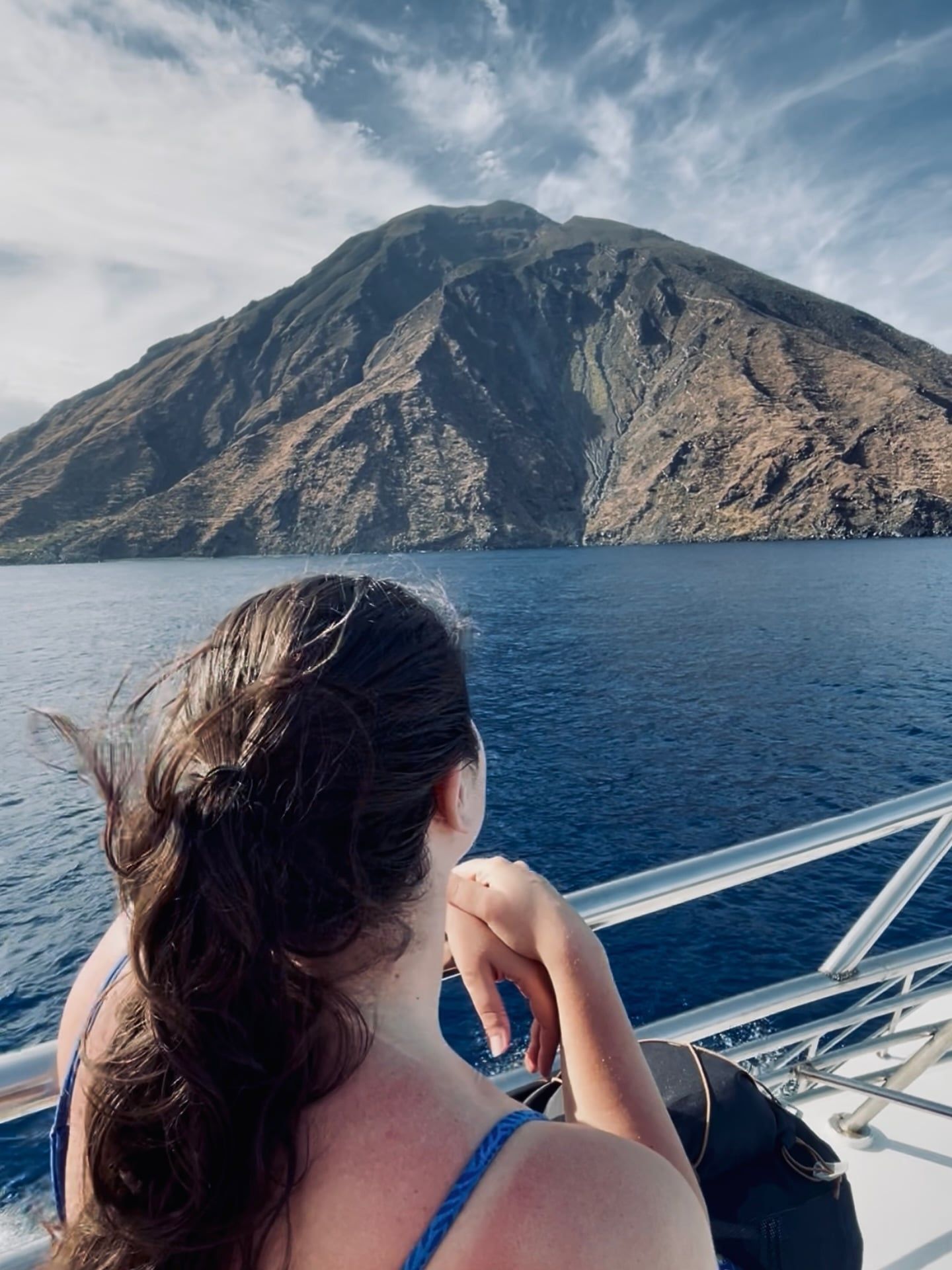
Find Guided ToursStromboli is an active stratovolcano located in the Tyrrhenian Sea off the north coast of Sicily. As one of the seven islands comprising Italy's Aeolian archipelago, it covers 12.6 square kilometers. The volcano rises 924 meters above sea level, though its entire structure extends more than 2,000 meters down to the ocean floor.
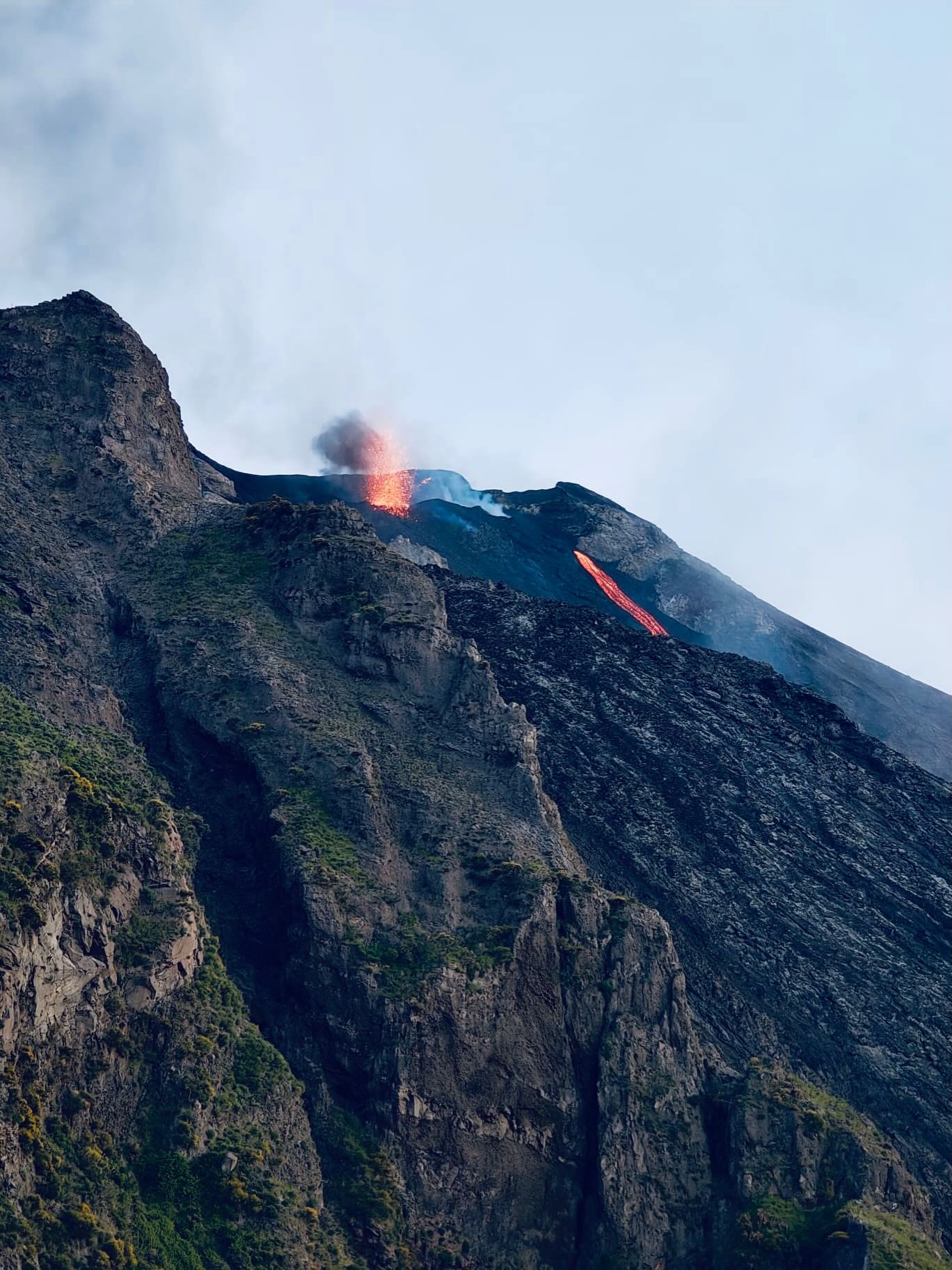
This site is one of the most active volcanoes on Earth and serves as the scientific type location for "Strombolian" eruptions. It erupts roughly every 10 to 20 minutes, producing mild explosions that eject glowing lava and ash. These regular, persistent light shows earned the island its famous nickname, the "Lighthouse of the Mediterranean."
The volcanic island has been building for nearly 200,000 years. Its earliest ancient activity formed the nearby rock of Strombolicchio. About 5,000 years ago, a massive flank collapse created the Sciara del Fuoco, or Stream of Fire. This steep depression on the northwestern side continues to funnel lava and pyroclastic flows directly into the sea.
Historians have documented Stromboli's continuous activity for over 2,000 years, and carbon dating confirms near-continuous eruptions for at least 1,400 years. The current eruptive phase has operated without interruption since 1932. While most activity is moderate, the volcano has produced powerful historical events, including a 1907 explosion that shattered village windows and a massive 1930 eruption that triggered an earthquake and a small tsunami. In recognition of its unique volcanological features, Stromboli was designated a UNESCO World Heritage site in 2000.
Discover the full history and cultural significance on our About page.
A certified volcanological guide leads this five-to-six-hour trek up the mountain. Departing in the late afternoon, the steep climb reaches the upper viewing platforms. As the sun sets, the ground shakes and spectacular red lava explosions jet into the night sky.
The coastal path winds through Mediterranean scrub to a safe viewpoint at 290 meters. This two-hour round-trip hike requires no guide and suits families. From the ridge, photographers can capture the Sciara del Fuoco, a steep depression funneling glowing lava flows directly into the sea.
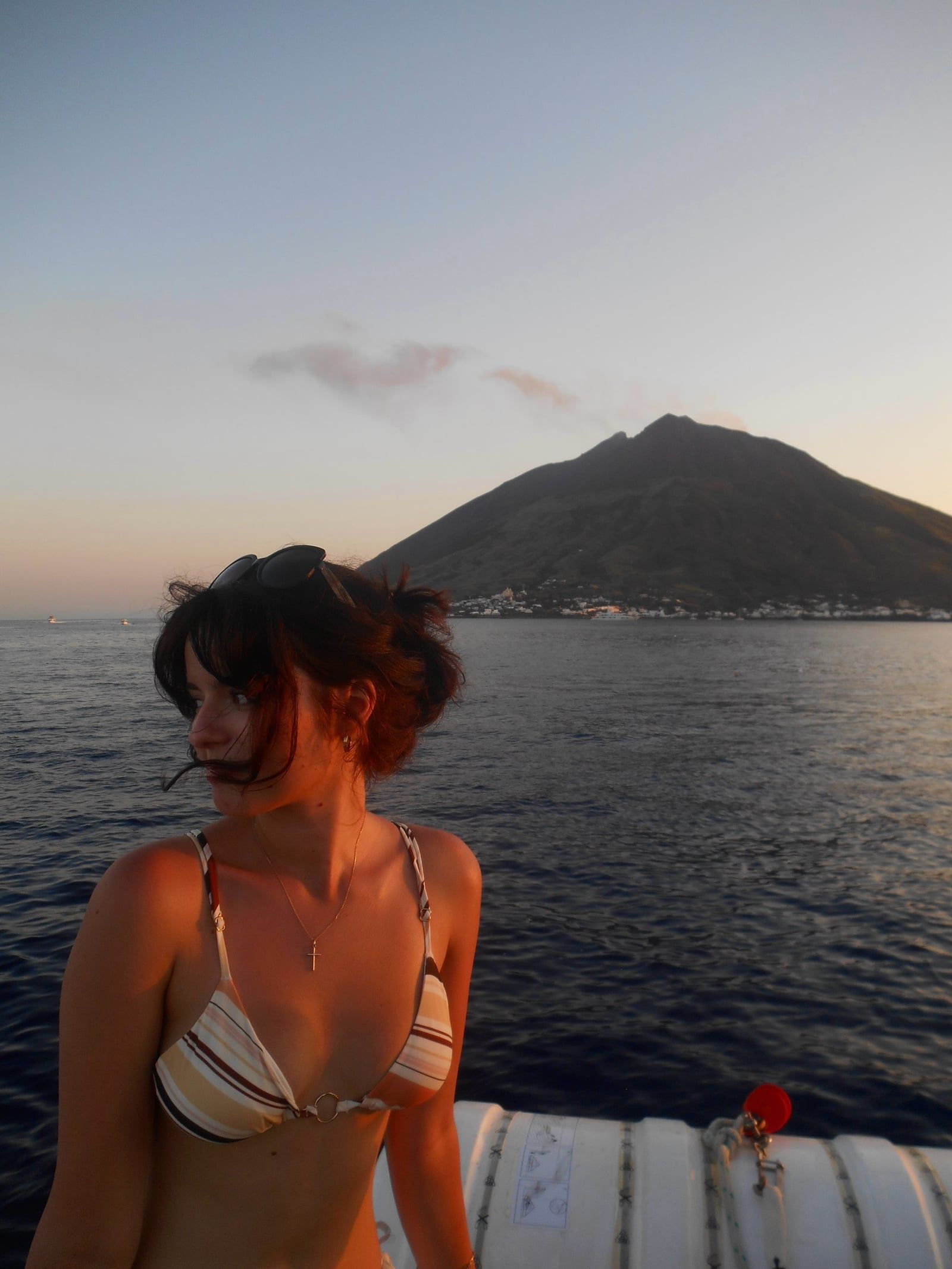
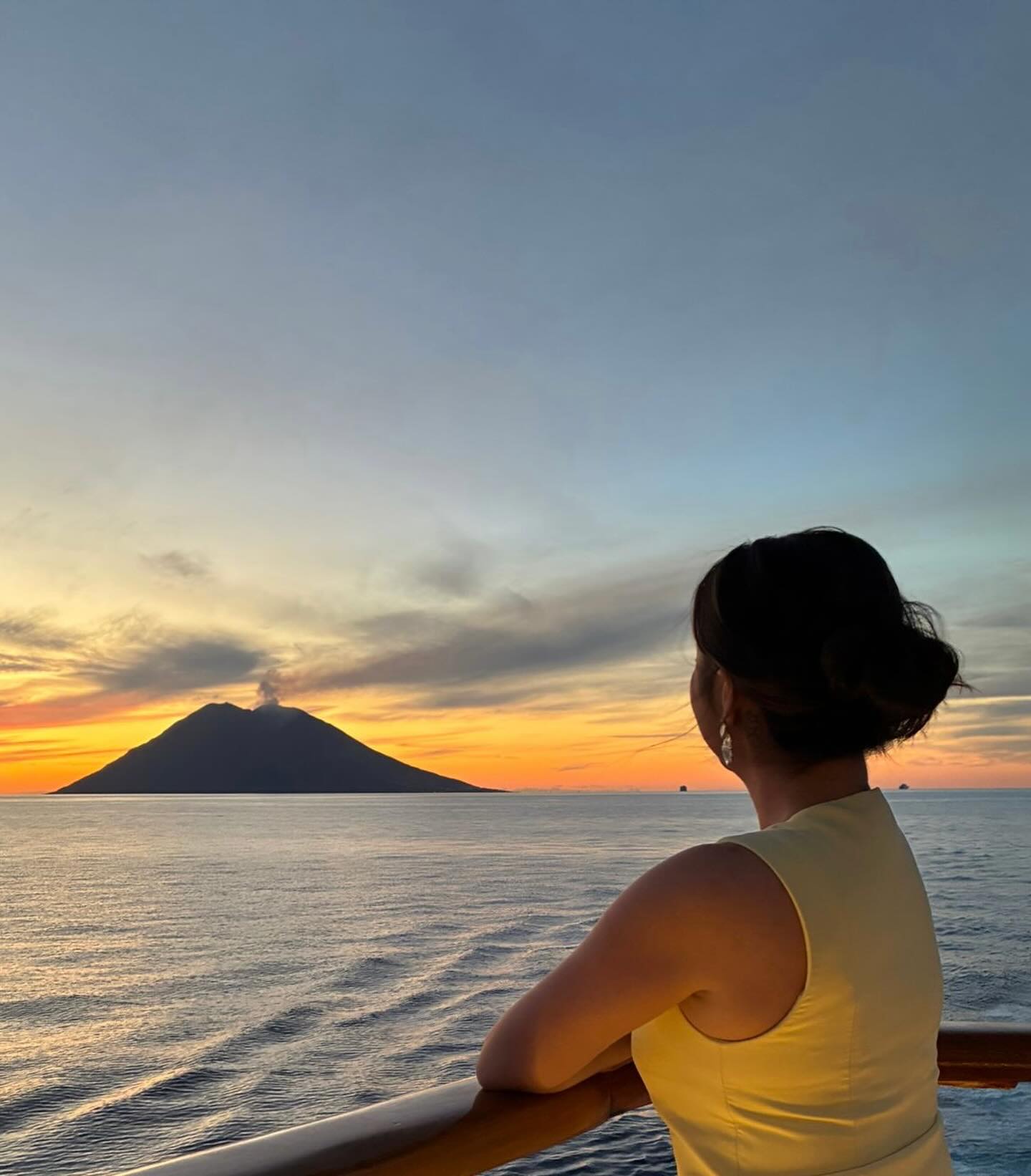
Small boats depart at sunset to observe the volcano's northwestern flank from the water. The Tyrrhenian Sea provides a safe vantage point to watch rhythmic lava fountains and debris sliding down the Sciara del Fuoco. This option delivers clear views of the active craters without physical strain.
A 3.5-kilometer walk from the harbor leads to the Osservatorio restaurant, serving traditional spaghetti alla Stromboliana. Because the island completely lacks public street lighting, the night skies remain exceptionally dark. Diners can watch the active craters erupt in the distance under a brilliant canopy of stars.
Hand-picked tours with free cancellation and verified reviews
 Free Cancellation 5h
  Free Cancellation 12h
  Free Cancellation
  Free Cancellation 12h
  Free Cancellation 8h
  Free Cancellation
  Free Cancellation 8h
  Free Cancellation 1h 30min
 The ideal times to visit Stromboli are from mid-March to June and September to October. These periods offer cooler temperatures for steep hikes and fewer crowds compared to the peak summer season.
Mid-March through May provides cooler, comfortable weather ideal for the strenuous 3 to 4-hour ascent to the summit. Guided sunset treks resume operations during this period.
While June is comfortable, July and August are the worst months to visit. Intense summer heat makes the steep hikes exhausting, and the island experiences heavy tourist crowds.
September and October are excellent for visiting, offering cooler temperatures for hiking and thinner crowds. However, November brings colder weather, reduced ferry schedules, and strong Scirocco winds.
Winter is an unfavorable time to visit due to cold weather and reduced ferry schedules. Strong southeast Scirocco winds frequently cause rough seas, leading to sudden boat cancellations.
Access to Stromboli is regulated daily by the Civil Protection Department based on current volcanic activity levels. The self-guided Sciara del Fuoco trail up to the 290-meter viewpoint is accessible during daylight hours year-round. Guided sunset treks to higher elevations run from mid-March until the end of October, with departures typically scheduled between 15:00 and 17:30 depending on the season.
| Category | Price |
|---|---|
| Aeolian Islands Landing Fee (typically included in ferry ticket) | €5.00 |
| Guided Group Trek (includes safety helmet and guide) | €30.00 |
Hiking above the 290-meter limit without a certified volcanological guide is strictly prohibited, and violations carry fines exceeding €500. Guided tour groups are limited to a maximum of 20 participants, requiring advance booking of several weeks during the peak summer season. A separate trekking tax may also apply.
For complete schedules and ticket prices, visit our Hours & Fees page.
Stromboli is accessible exclusively by sea via ferries and hydrofoils. Regular connections operate from mainland Italy, Sicily, and the neighboring Aeolian Islands.
📍 Stromboli Island, Tyrrhenian Sea, Sicily, Italy
Departing from Milazzo in Sicily, this 40-kilometer route is the most popular and reliable way to reach the island. Liberty Lines and Siremar operate these vessels, offering over 10 daily departures throughout the year. Travelers flying into Catania Airport can easily connect to this service by taking a direct Giuntabus shuttle to the Milazzo Port.
SNAV and Alilauro run daily hydrofoil services along this 260-kilometer route during the summer months between May and September. Outside of this peak season, visitors must rely on the slower overnight ferry operated by Siremar or Laurana. These winter crossings are less frequent and highly susceptible to cancellations caused by poor weather conditions.
Liberty Lines manages regular hydrofoil connections between Stromboli and neighboring Aeolian Islands such as Salina, Vulcano, and Lipari. This 30-kilometer crossing is an ideal choice for tourists planning an inter-island hopping itinerary across the archipelago. The short transit time provides a fast and highly efficient method to navigate between the islands during a visit.
For detailed transport options and routes, visit our Directions page.
Stromboli lacks public street lighting, leaving the island pitch black after sunset. You need a reliable torch or headlamp to navigate the narrow, unpaved paths safely. This prevents tripping on uneven volcanic terrain when walking back to your accommodation at night.
Motorized vehicles are restricted to residents, meaning tourists must navigate the steep streets on foot. Carrying heavy luggage from the ferry dock is exhausting. Instead, hire a local Ape Car porter at the Scari pier for €10 to €15 to transport your bags directly to your hotel.
Hiking above the 290-meter mark without a certified volcanological guide is illegal and carries fines exceeding €500. Tour companies like Magmatrek strictly limit groups to a maximum of 20 participants. You should secure your reservation several weeks online before arriving, especially during the peak summer season.
Guided excursions strictly prohibit beachwear, shorts, and flip-flops. Hikers must wear long pants and sturdy boots, as radiating heat from active lava flows can melt improper footwear. Tour guides enforce these safety checks and will leave you behind if you lack the required equipment.
Strong southeast Scirocco winds frequently cause rough seas around the island. These conditions can lead to sudden cancellations of ferries and hydrofoils, particularly during the winter months. Always verify the weather and boat schedules on the morning of your departure to avoid getting stranded.
The high-altitude trails are hazardous and unsuitable for young children or those with limited mobility. Families should opt for the self-guided Sciara del Fuoco trail instead. This easier path takes two hours round trip and leads to a safe viewing platform at 290 meters.
This steep volcanic rock is the residual neck of the original active volcano from 200,000 years ago. A historic lighthouse sits on its summit. Sunset boat excursions provide excellent views of Stromboli from the water.
Located on the southwestern coast, this isolated former fishing village has only a few dozen residents and zero motorized cars. Visitors walk among traditional whitewashed houses, enjoying a quiet escape from main tourist areas.
Another active volcano in the Aeolian archipelago, Vulcano features therapeutic mud baths and sulfurous hot springs. Travelers can hike to its own active crater or relax along the island's black sand beaches.
Read what travelers share about their experience visiting Stromboli Volcano — from practical tips to personal highlights.
The most reliable route is taking a ferry or hydrofoil from Milazzo, Sicily, which takes 1 hour and 30 minutes and costs between €25 and €35 one way. During the summer months, hydrofoils also run daily from Naples, taking about 4 hours and 30 minutes for €60 to €90. You can also take a 1-hour hydrofoil from neighboring islands like Salina for €15 to €25.
Joining a guided group trek to the craters costs approximately €30 per person, which includes safety helmets and an English-speaking guide. Visitors must also pay an Aeolian Islands landing fee of about €5.00, usually included in the ferry ticket, and a separate trekking tax may apply.
Yes, hiking above the 290-meter limit without a certified volcanological guide is strictly prohibited by local regulations and carries fines exceeding €500. Guided groups are limited to a maximum of 20 participants, so you should book your tour several weeks in advance during the peak summer season.
The classic guided summit trek takes about 5 to 6 hours in total, consisting of a 3-hour ascent, 1 hour at the viewing platforms, and a 1.5-hour descent. If you prefer a shorter hike, the self-guided coastal trail to the 290-meter viewpoint takes about 2 hours round trip.
Proper hiking gear is mandatory, and guides will turn you away if you wear prohibited items like shorts, beachwear, or flip-flops. You must bring sturdy hiking boots, long pants, a windproof jacket, a high-quality respirator to protect against toxic gases, and a headlamp.
The steep, high-altitude trails are hazardous and not manageable for young children, elderly visitors with limited mobility, or those with cardiac conditions. Families should instead take the easier, self-guided Sciara del Fuoco trail to the 290-meter viewpoint, which is much safer and takes only 2 hours.
There are no public transport systems or rental cars on Stromboli, as only residents are permitted to drive motorized vehicles. Visitors can walk across the flat areas of the main village in about 20 minutes or hire local Ape Car porters at the pier for €10 to €15 to transport luggage.
The most comfortable months to visit are from mid-March to June and September to October, when temperatures are cooler for the strenuous climbs. During the operating season, guided sunset treks depart between 15:00 and 17:30 depending on the month. Avoid July and August due to extreme heat and heavy crowds.
Browse verified tours with free cancellation and instant confirmation.
Find Tours